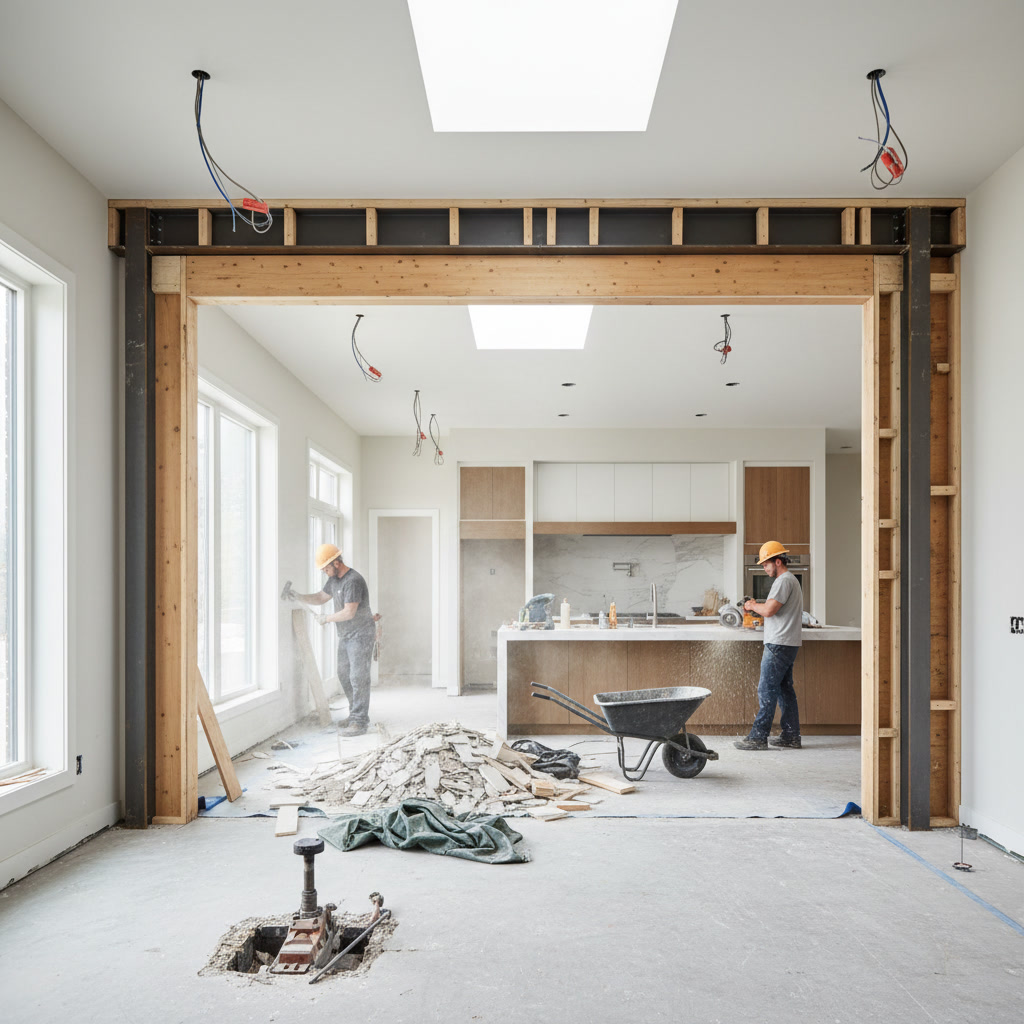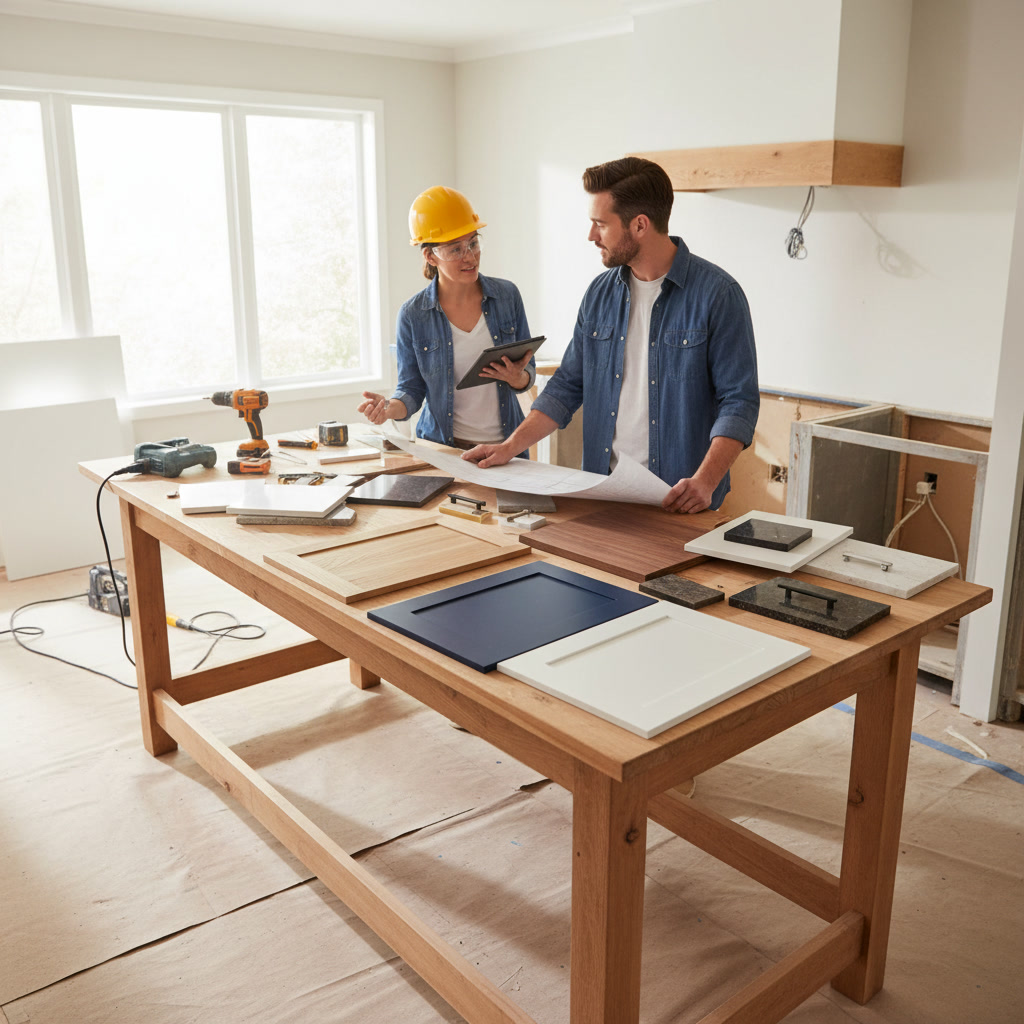
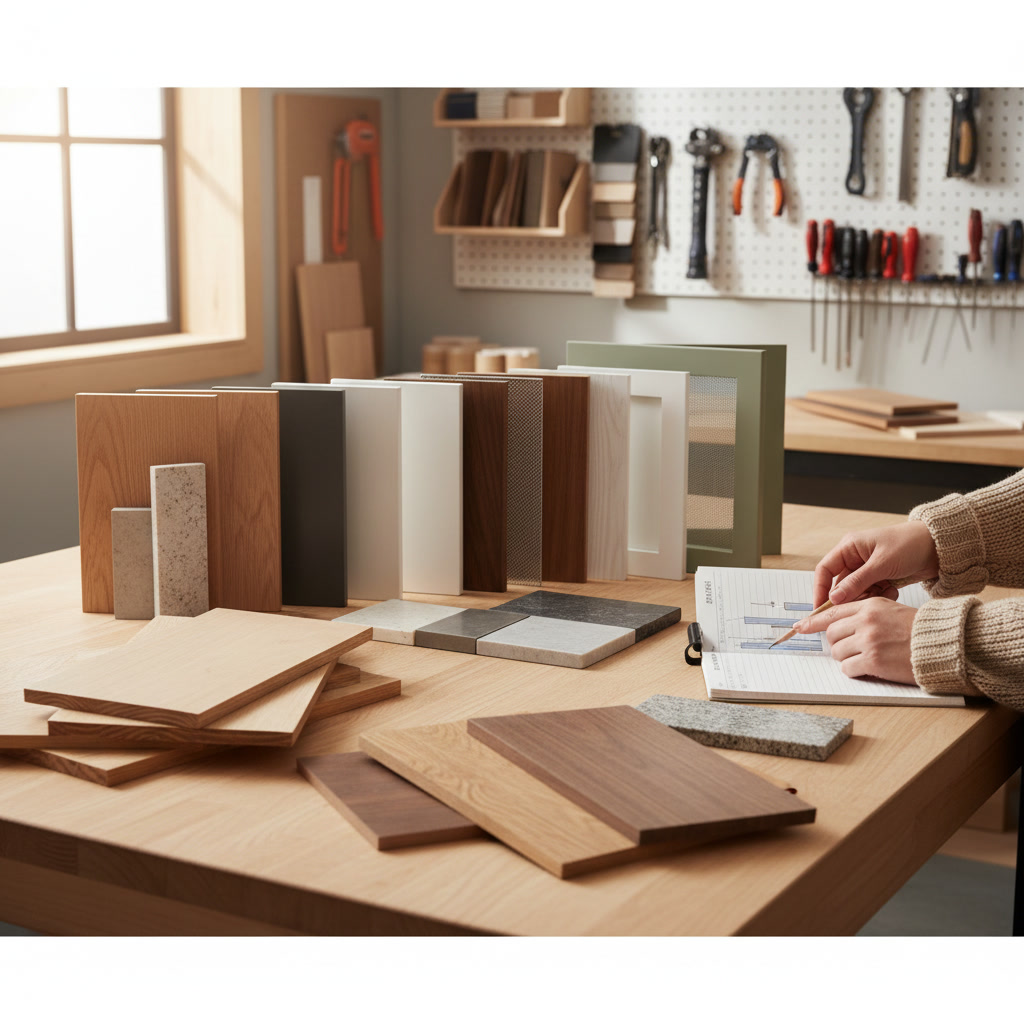
Selecting the right cabinet materials impacts your kitchen’s durability, appearance, and budget for decades to come. When you choose kitchen cabinet materials, you balance cost, strength, moisture resistance, and aesthetic flexibility. Solid wood offers timeless appeal but requires a higher investment, while engineered options like plywood and MDF deliver stability at varied price points. Understanding each material’s performance under real-world conditions helps you avoid costly mistakes and ensures your cabinets hold up to daily use.
Why Cabinet Material Choice Matters More Than You Think
Cabinets account for nearly 40 percent of your kitchen remodeling budget, making material selection one of the most financially significant decisions you will face. Beyond cost, the material dictates how well your cabinets resist warping in humid climates, how easily they accept paint or stain, and how long they maintain structural integrity under the weight of dishes and appliances. Poor material choices lead to sagging shelves, peeling finishes, and premature replacement.
The Role Cabinets Play in Your Overall Kitchen Design
Cabinets define the visual tone of your kitchen while providing the bulk of your storage infrastructure. Their material influences both the color palette you can achieve and the hardware styles that complement the grain or finish. When planning your project, coordinating cabinet materials with countertop selections and flooring ensures a cohesive look. Many homeowners working on a kitchen remodeling project discover that cabinet doors set the stage for every other design choice, from backsplash tile to lighting fixtures.
Solid Wood Cabinets and When They Make Sense
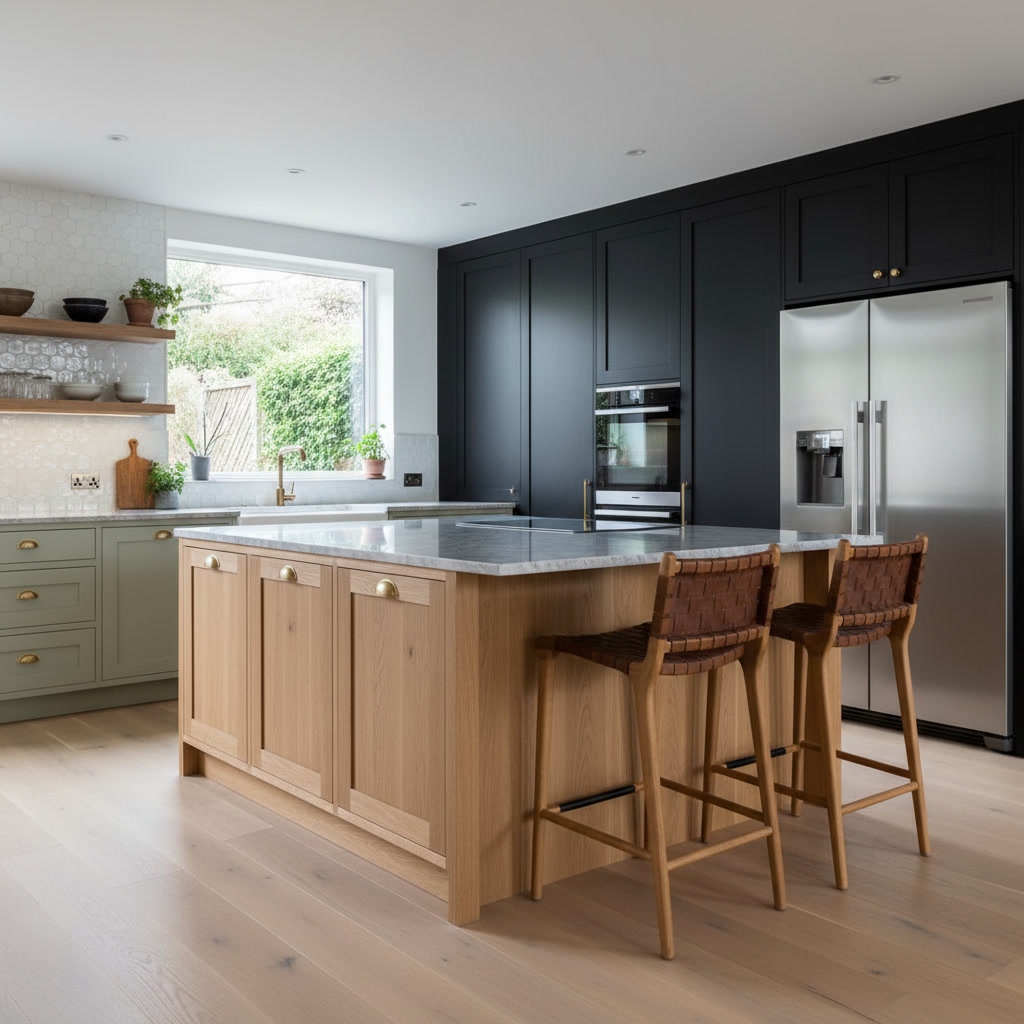
Solid hardwood, including oak, maple, cherry, and hickory, remains the gold standard for cabinet construction. These species offer natural grain patterns, excellent screw-holding strength, and the ability to sand and refinish multiple times over decades. Solid wood expands and contracts with humidity changes, so proper kiln-drying and finish application are critical. Expect to pay 20 to 50 percent more than engineered alternatives, but you gain heirloom quality and the option to restore rather than replace.
Hardwood performs best in climate-controlled environments and requires periodic maintenance to preserve finish integrity. If you live near the coast, humidity swings demand careful sealing. Solid wood accepts stain beautifully, allowing you to highlight grain character, but painted finishes can show wood movement over time as seasonal expansion creates hairline cracks.
Plywood Construction for Strength and Stability
Plywood consists of thin wood veneers glued in alternating grain directions, creating a panel that resists warping better than solid lumber. Cabinet-grade plywood, typically birch or maple veneer over a hardwood core, delivers excellent screw retention and dimensional stability. It costs less than solid wood while outperforming particleboard and MDF in moisture resistance. Many professional contractors in Delray Beach recommend plywood for cabinet boxes even when solid wood is used for doors and face frames.
Plywood edges require edge-banding or solid wood trim to conceal the layered core, adding a finishing step. The material accepts paint and stain well, though veneer quality varies. Higher grades feature consistent color and minimal voids, while lower grades may show patches or plugs. For structural components like cabinet sides and shelves, three-quarter-inch plywood provides long-term durability without sagging.
MDF and Particleboard Options Compared
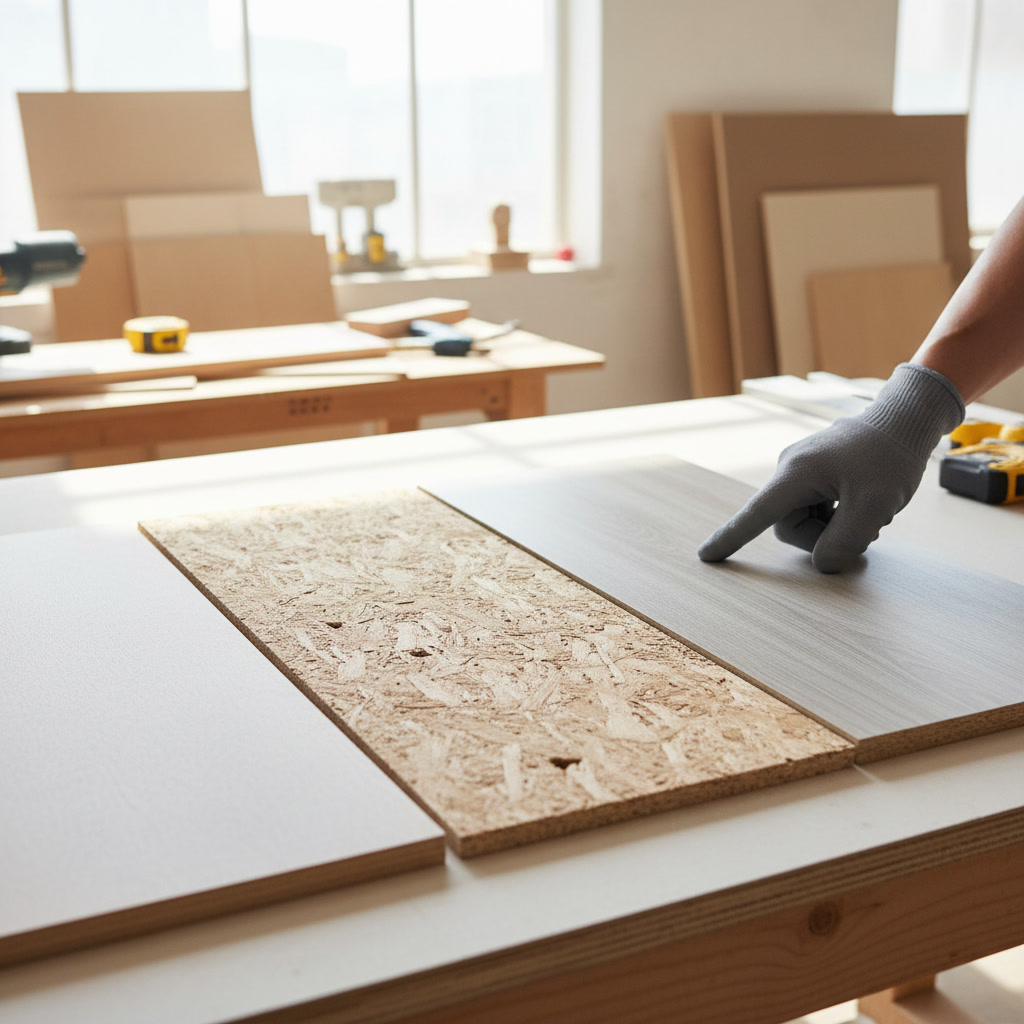
Medium-density fiberboard, or MDF, consists of wood fibers bonded with resin under heat and pressure. It offers a smooth, uniform surface ideal for painted finishes because it lacks grain and accepts primer evenly. MDF costs significantly less than plywood or solid wood and machines cleanly without splintering. However, it is dense and heavy, and standard MDF swells dramatically when exposed to water. Moisture-resistant MDF formulations address this weakness but add cost.
Particleboard, made from wood chips and adhesive, sits at the budget end of the spectrum. It holds screws poorly compared to plywood and MDF, and moisture causes irreversible swelling and crumbling. Particleboard cabinets work for short-term installations or areas with zero moisture exposure, but they rarely last more than a decade under normal kitchen conditions. If budget constraints are severe, prioritize plywood for structural components and reserve particleboard for non-load-bearing panels.
Thermofoil and Laminate Finishes Explained
Thermofoil cabinets feature MDF cores wrapped in a vinyl film heated and vacuum-pressed to bond permanently. The result is a seamless, paint-like finish available in countless colors and textures, including convincing wood-grain patterns. Thermofoil resists minor scratches and cleans easily, but high heat near stoves can cause the film to peel. Repairs are difficult because the film cannot be touched up with paint.
Laminate cabinets use a thin plastic sheet glued to particleboard or MDF. Laminate offers excellent moisture resistance and durability at a lower price than solid wood. It comes in matte, gloss, and textured finishes, including realistic wood and stone looks. Edges require careful sealing to prevent delamination, and deep scratches expose the substrate. Both thermofoil and laminate deliver modern aesthetics without the maintenance demands of natural wood.
Matching Cabinet Materials to Your Lifestyle in South Florida
Humidity, salt air, and temperature fluctuations in coastal areas demand materials that resist moisture and maintain finish integrity. Plywood and moisture-resistant MDF outperform standard particleboard in these conditions. If you cook frequently and generate steam, solid wood or plywood boxes with quality finishes prevent warping and mold growth. Homes in Boca Raton or West Palm Beach benefit from materials engineered to handle the subtropical environment.
Families with young children may prioritize easy-clean surfaces like laminate or thermofoil, which tolerate spills and sticky hands without staining. If you entertain often and want a high-end appearance, solid wood or wood-veneer plywood with custom stain delivers visual warmth and character. Match your material choice to how hard you use your kitchen rather than relying solely on aesthetic preference.
Budget Planning for Cabinet Materials
Solid hardwood cabinets typically range from 200 to 400 dollars per linear foot installed, depending on species and finish complexity. Plywood construction falls between 150 and 300 dollars per linear foot, offering a middle ground between cost and performance. MDF and thermofoil options start around 100 to 200 dollars per linear foot, while particleboard budget lines can dip below 100 dollars but sacrifice longevity.
Allocate at least 30 percent of your total kitchen budget to cabinetry, and reserve another 10 percent for hardware, pulls, and soft-close mechanisms. Cutting material quality to save a few hundred dollars often results in premature replacement, erasing any short-term savings. If budget is tight, consider reducing cabinet quantity or simplifying door styles rather than downgrading core materials. Understanding the full scope of how a remodel progresses helps you prioritize spending where it matters most.
Coordinating Cabinets with Countertops and Flooring
Cabinet material and finish influence the visual weight of your kitchen, so coordinate them with countertop stone or quartz and floor surfaces. Dark wood cabinets pair well with light countertops and neutral tile to prevent a cave-like feel, while white or light-stained cabinets allow bold countertop patterns to shine. If you are installing tile flooring, consider how cabinet toe-kick heights align with tile thickness to avoid awkward transitions.
Natural wood cabinets complement both traditional and contemporary designs when matched with the right hardware and countertop edge profiles. Painted cabinets offer flexibility to refresh your look with new hardware or backsplash tile without replacing the entire box. When planning material selections, request samples and view them in your kitchen’s lighting conditions, as showroom fluorescents distort color and grain appearance.
Maintenance Requirements for Long-Term Performance
Solid wood cabinets benefit from annual cleaning with wood-specific cleaners and occasional reapplication of furniture polish to protect finishes. Avoid excessive water around hinges and edges, and wipe spills immediately to prevent staining. Plywood and MDF cabinets require similar care, though painted MDF tolerates damp cleaning better than stained wood.
Thermofoil and laminate surfaces resist moisture and stains but can scratch if cleaned with abrasive pads. Use soft cloths and mild detergents, and avoid placing hot pots directly against doors. Inspect hinges and drawer glides yearly, tightening screws and lubricating tracks to extend hardware life. Proper maintenance doubles the functional lifespan of any cabinet material, regardless of initial cost.
Making the Right Material Decision for Your Home
Choosing cabinet materials requires balancing budget, durability, and aesthetic goals while accounting for your local climate and usage patterns. Solid wood and plywood offer superior longevity and refinishing options, justifying higher upfront costs for homeowners planning to stay long-term. MDF and thermofoil deliver modern looks and easy maintenance at mid-range prices, ideal for families prioritizing practicality. Particleboard remains viable only for the tightest budgets or temporary installations.
Request detailed material specifications from contractors, including core construction, veneer grade, and finish type. Compare warranties, as quality manufacturers back their products for 10 years or more. A well-chosen cabinet material enhances your daily kitchen experience and protects your remodeling investment for decades.
Flooring Friend LLC brings 10 years of experience to every kitchen remodeling project, guiding homeowners through material selection, design coordination, and expert installation. Our team understands the unique demands of South Florida’s climate and delivers craftsmanship that stands the test of time. Contact us at +15617882222 to discuss your cabinet material options and start building the kitchen you deserve.