
Kitchen remodeling contracts serve as legally binding agreements that define the scope, timeline, payment terms, and responsibilities for both homeowner and contractor. A comprehensive contract prevents misunderstandings, protects your deposit, establishes quality standards, and provides legal recourse if disputes arise. Every kitchen renovation project requires a written agreement that clearly outlines materials, labor, permits, and change-order procedures before any work begins.
Why a Written Agreement Matters More Than Verbal Promises
Verbal agreements hold little weight when disputes arise during a renovation. Without documentation, you have no proof of agreed-upon materials, timelines, or prices. Contractors who hesitate to provide written contracts often lack proper licensing or insurance. A signed document establishes accountability and gives both parties clear expectations from the start.
Florida law requires contractors to provide written contracts for projects exceeding $2,500. Even for smaller jobs, documentation protects you from surprise charges and scope creep. Courts rarely enforce verbal promises, making a written contract your primary legal protection.
Essential Contractor Identification and Licensing Information
Every contract must begin with complete contractor details. Verify the business name, physical address, and Florida contractor license number. Check that the license is active and matches the name on the contract. Request proof of general liability insurance and workers’ compensation coverage.
The agreement should list the project manager or lead carpenter who will oversee daily work. This person becomes your primary contact for questions and concerns. Contracts lacking proper identification details often signal unlicensed operators who disappear when problems arise.

Detailed Scope of Work Protects Against Misunderstandings
The scope section must describe every task the contractor will perform. Vague language like “complete kitchen renovation” leaves too much room for interpretation. Instead, specify cabinet removal, countertop installation, tile installation dimensions, electrical outlet additions, and plumbing modifications.
List what the contractor will not do. If you plan to handle painting or fixture shopping, state that explicitly. Define who removes debris, protects adjacent rooms, and cleans the site daily. The more specific your scope section, the fewer disputes arise during construction. Understanding the full remodeling process from design to completion helps you identify what should appear in this section.
Material Specifications Prevent Substitution Surprises
Generic descriptions allow contractors to install the cheapest available materials while charging for premium products. Your contract should specify manufacturers, model numbers, colors, and grades for every material. Include cabinet brand and door style, countertop material and edge profile, faucet manufacturer and finish, and flooring product line and color.
Attach product spec sheets or tearsheets to the contract. If you selected a specific quartz pattern, staple the sample photo to the agreement. When homeowners in Delray Beach choose premium materials, detailed specifications prevent contractors from substituting lower-quality alternatives without permission.
Payment Schedule Terms in Delray Beach Kitchen Projects
Florida law limits initial deposits to 10% of the contract price or $1,000, whichever is less, for projects under $200,000. Responsible contractors tie payments to project milestones rather than calendar dates. A typical schedule includes deposit upon signing, payment after demolition and rough-in inspection, payment after cabinet and countertop installation, and final payment after final inspection and walk-through.
Never agree to pay the full amount upfront or make the final payment before completing the punch list. Reserve at least 10% until you verify all work meets contract specifications. Payment terms should specify acceptable methods and define what constitutes completion for each milestone.
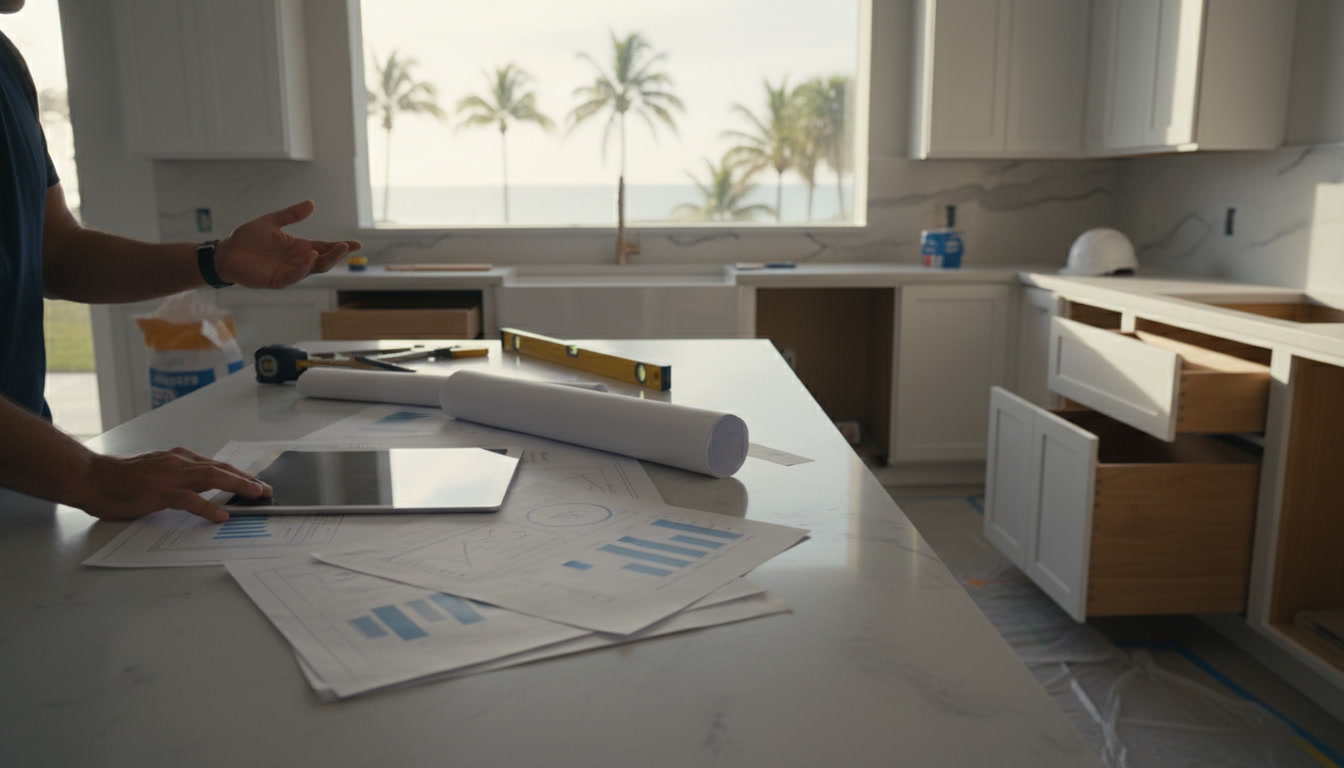
Timeline Expectations and Delay Provisions
Realistic timelines prevent frustration and hold contractors accountable. The contract should list the start date, substantial completion date, and final completion date. Include language addressing delays caused by weather, permit issues, material backorders, or homeowner-requested changes.
Some contracts include per-day penalties for contractor-caused delays beyond a grace period. While difficult to enforce, this clause demonstrates the contractor’s commitment to timely completion. Specify how many days constitute acceptable delay before penalties apply, typically seven to 10 business days for kitchen projects.
Change Order Procedures You Must Understand
Changes during construction are common, but informal agreements lead to billing disputes. Your contract should require written change orders for any work beyond the original scope. Each change order must describe the new work, list additional materials, state the price adjustment, and specify the timeline impact.
Both parties sign change orders before the contractor proceeds with modified work. This prevents situations where contractors perform unrequested upgrades and demand payment. If you discover structural issues requiring additional kitchen remodeling work, the change order process protects you from inflated emergency pricing.
Warranty Coverage for Labor and Materials
Separate warranties cover workmanship and materials. Manufacturer warranties on cabinets, appliances, and fixtures vary from one year to lifetime coverage. Contractor workmanship warranties typically run one to two years and cover installation defects like uneven tile, poor cabinet alignment, or plumbing leaks.
The contract should specify warranty duration, what it covers, and the claim process. Flooring Friend LLC provides clear warranty terms that protect homeowners long after project completion. Exclude normal wear, homeowner damage, and issues caused by improper maintenance from warranty coverage. Request warranty documentation for all installed products and keep it with your contract.

What Happens If Disputes Arise During Your Project
Dispute resolution clauses outline steps for handling disagreements. Many contracts require mediation before litigation. Mediation involves a neutral third party who helps both sides reach agreement without court intervention. This approach costs less than lawsuits and typically resolves issues within weeks.
Specify which Florida county has jurisdiction for legal disputes. Homeowners in Boca Raton or West Palm Beach want disputes handled locally rather than in distant courts. The contract should state whether the prevailing party recovers attorney fees. This clause discourages frivolous claims and encourages reasonable settlements.
Seven Critical Items Every Contract Checklist Must Include
Before signing, verify your contract contains these essential elements. First, complete contact information for both parties including physical addresses and phone numbers. Second, detailed scope of work listing every task and exclusion. Third, specific material descriptions with brands and model numbers.
Fourth, itemized payment schedule tied to project milestones. Fifth, start and completion dates with delay provisions. Sixth, change order procedures requiring written authorization. Seventh, warranty terms for workmanship and materials with claim processes.
Review the contract at home without pressure. Ask questions about unclear terms before signing. Cross out or modify unacceptable clauses and initial changes. Both parties should receive signed copies of the final agreement.
Protecting Your Investment With Smart Contract Terms
A thorough written agreement transforms your kitchen renovation from a stressful gamble into a managed project with clear expectations. Strong kitchen remodeling contracts prevent payment disputes, material substitutions, and timeline disagreements that damage contractor relationships and delay completion. Taking time to negotiate and document every detail protects your investment and ensures the finished kitchen meets your specifications.
Flooring Friend LLC brings 10 years of experience to every kitchen renovation project throughout Palm Beach County. Our comprehensive contracts protect homeowners while our certified teams deliver exceptional craftsmanship on cabinets, countertops, and flooring installations. If you are planning a kitchen update and want a contractor who values transparency and detailed agreements, reach out to our team at +15617882222 to discuss your project and receive a clear, detailed proposal.