The best flooring for kitchen remodel projects depends on three core factors: water resistance, durability under foot traffic, and maintenance requirements. Kitchens experience frequent spills, dropped utensils, and constant movement, making material choice critical to both function and longevity. Your flooring must withstand daily wear while complementing your design vision and fitting your budget.
Why Your Kitchen Floor Faces Unique Challenges
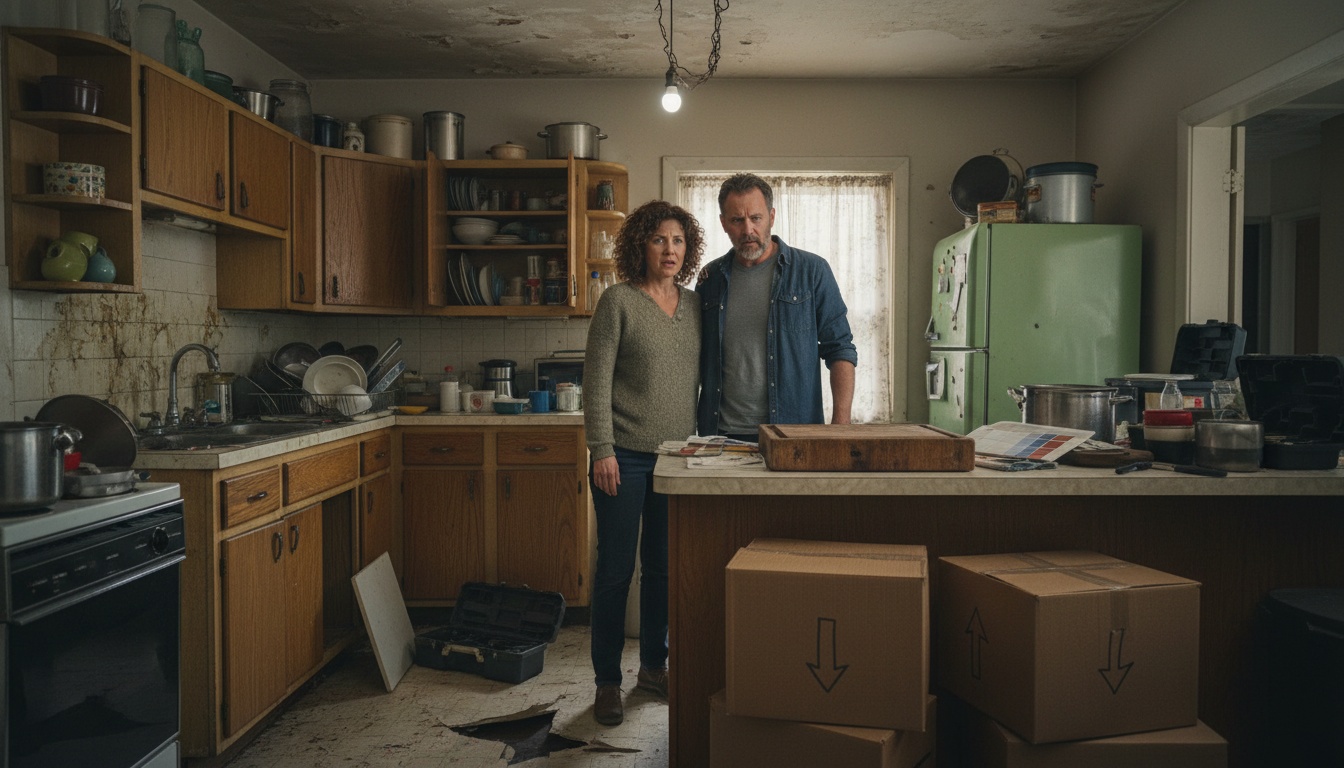
Kitchen floors endure more stress than any other room in your home. Water splashes from sinks and dishwashers, grease splatters during cooking, and heavy appliances create permanent indentations if your flooring cannot handle the load. Temperature fluctuations from ovens and refrigerators add another layer of complexity. Understanding these specific demands helps you avoid costly mistakes when selecting materials.
The average kitchen floor supports 150 to 300 pounds per square foot when you account for appliances, cabinets, and human traffic. High-traffic households with children or pets multiply the wear exponentially. Your flooring choice needs to account for both current use patterns and anticipated future needs, especially if you plan to age in place or sell within five to ten years.
How Material Selection Impacts Your Kitchen’s Long-Term Value
Real estate professionals consistently report that kitchen flooring influences buyer perception and resale value more than most homeowners realize. Outdated or damaged floors immediately signal deferred maintenance, while quality materials positioned as part of a cohesive design tell a story of careful investment. The right floor can recover 70 to 85 percent of its installation cost at resale in South Florida markets.
Beyond resale considerations, your daily experience changes dramatically based on material choice. Some floors feel cold underfoot year-round, while others retain warmth. Acoustic properties vary widely, with hard surfaces amplifying noise and softer materials absorbing sound. If you spend significant time cooking or entertaining, comfort and sound control become practical priorities rather than luxury features.
Porcelain and Ceramic Tile Deliver Proven Performance
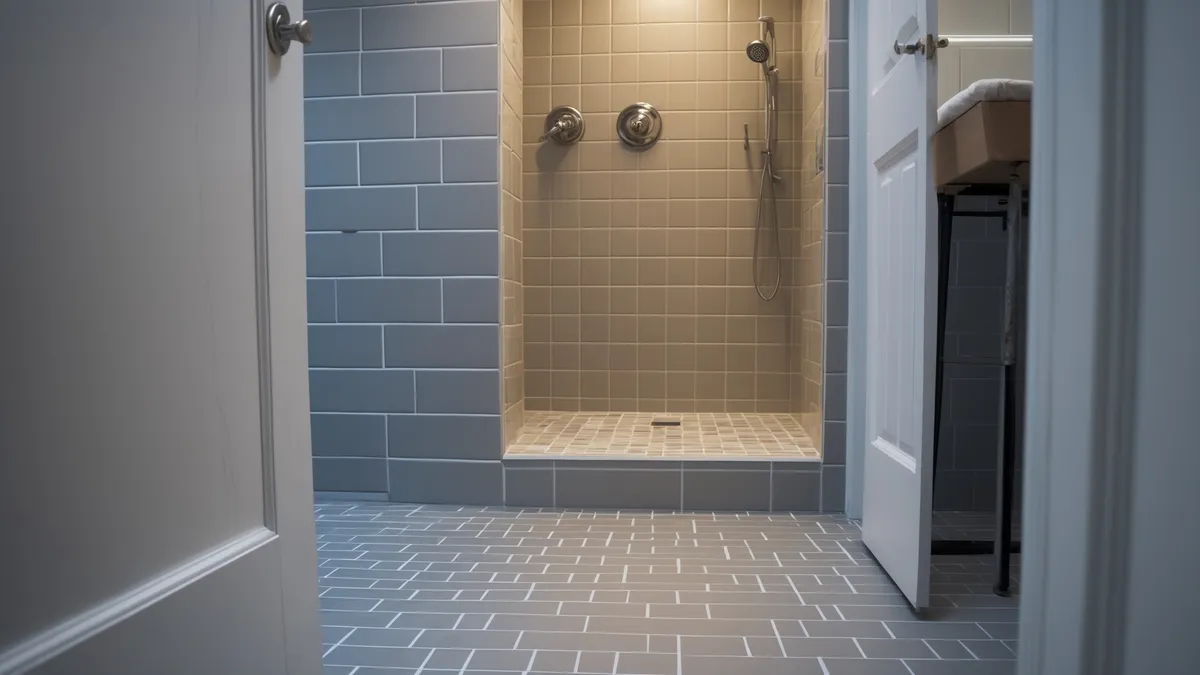
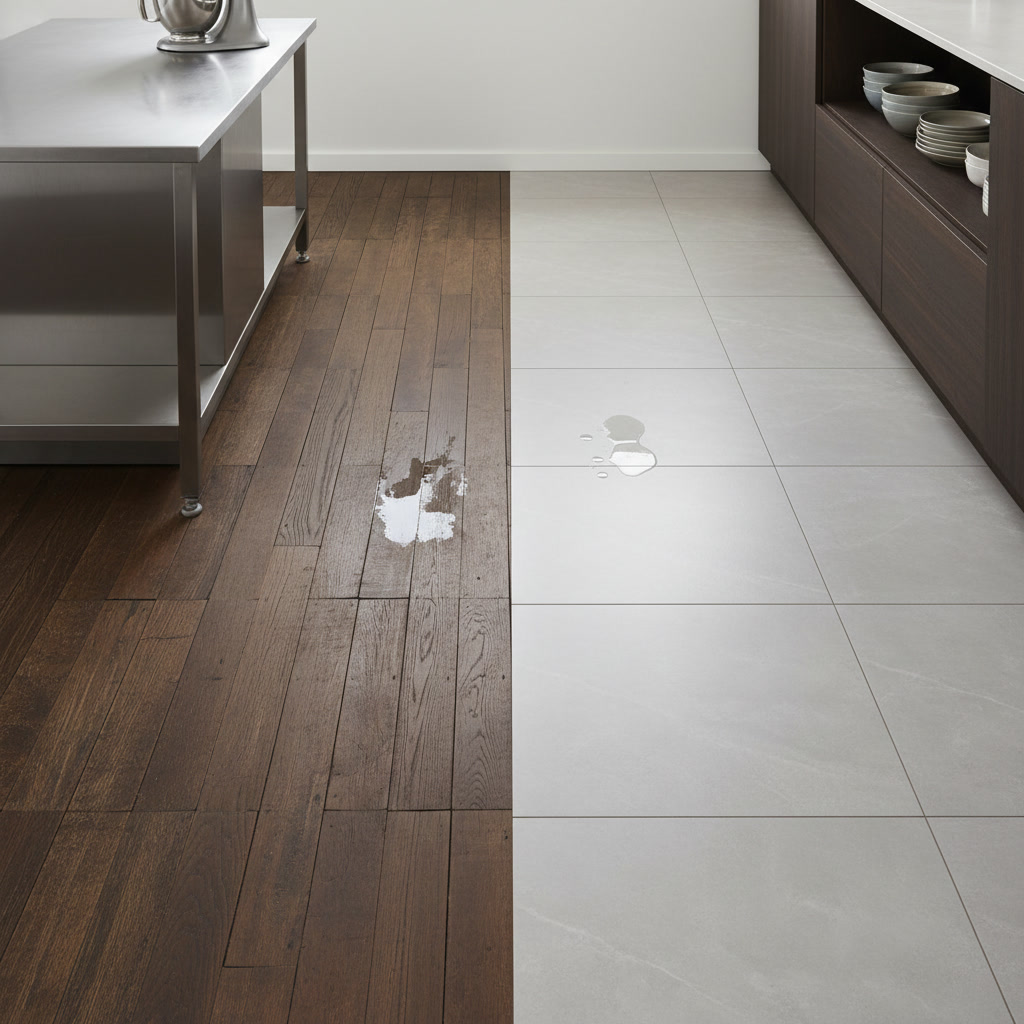
Porcelain tile remains the gold standard for kitchen floors in coastal regions because it resists moisture completely and handles humidity without warping. Unlike ceramic tile, which absorbs up to three percent water, porcelain absorbs less than 0.5 percent, making it ideal for homes near the ocean or in flood-prone areas. Porcelain’s density also makes it nearly impervious to scratches, stains, and chemical damage from cleaning products.
Installation quality matters more with tile than with almost any other material. Improperly set tiles develop hollow spots that crack under pressure, and poorly mixed grout allows water penetration that undermines the substrate. Professional tile installation includes proper waterproofing membranes, correct thinset application, and grout sealing that protects your investment for 20 years or more.
Large-format tiles measuring 12×24 inches or larger minimize grout lines, reducing maintenance and creating a more seamless visual flow. Rectified edges allow for tighter grout joints as narrow as one-eighth inch, further simplifying cleaning. Tile pricing ranges from three dollars per square foot for basic ceramic to 15 dollars or more for premium porcelain, with installation adding another five to eight dollars per square foot depending on pattern complexity.
Luxury Vinyl Plank Offers Modern Versatility in Delray Beach Homes
Luxury vinyl plank has evolved far beyond the vinyl sheeting of previous decades. Modern LVP products feature rigid cores that resist denting, photorealistic imaging that mimics wood grain convincingly, and wear layers thick enough to handle commercial traffic levels. Waterproof construction makes LVP particularly attractive for kitchen installations where spills and leaks pose constant threats.
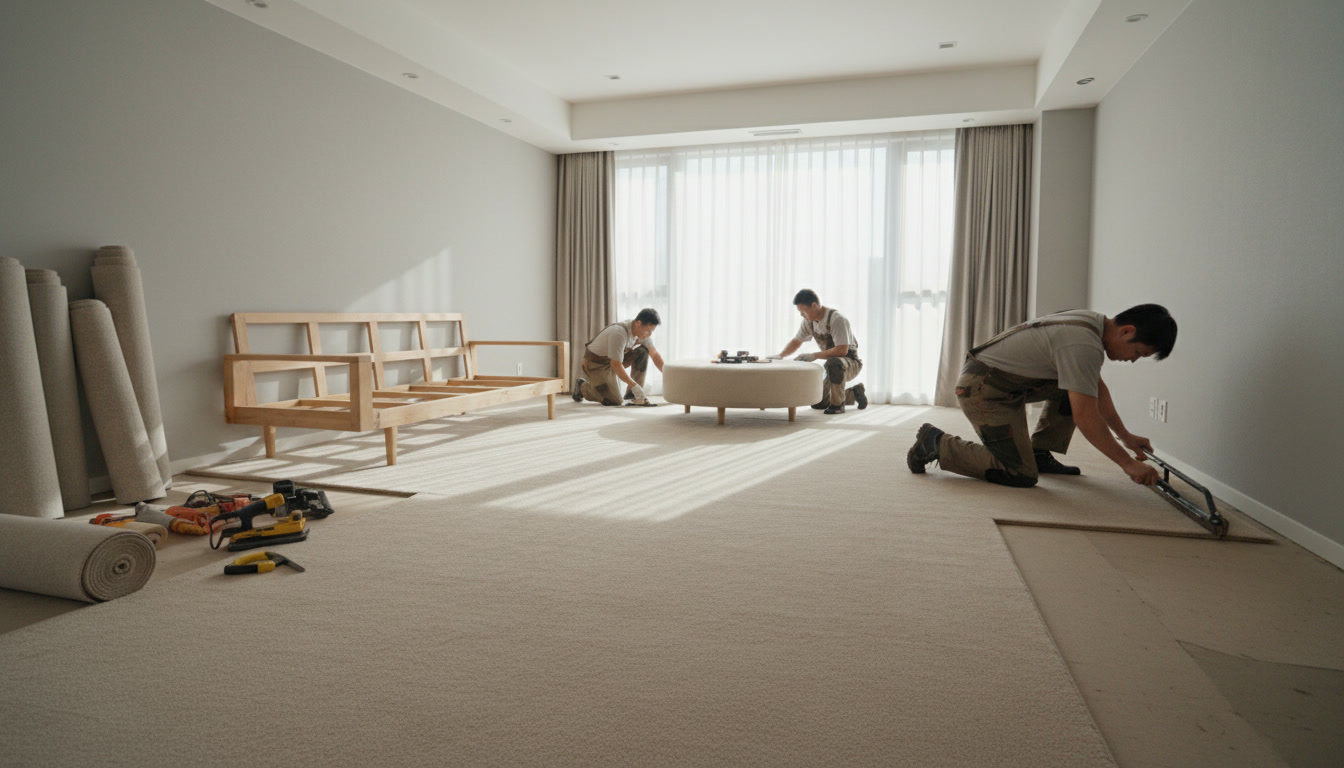
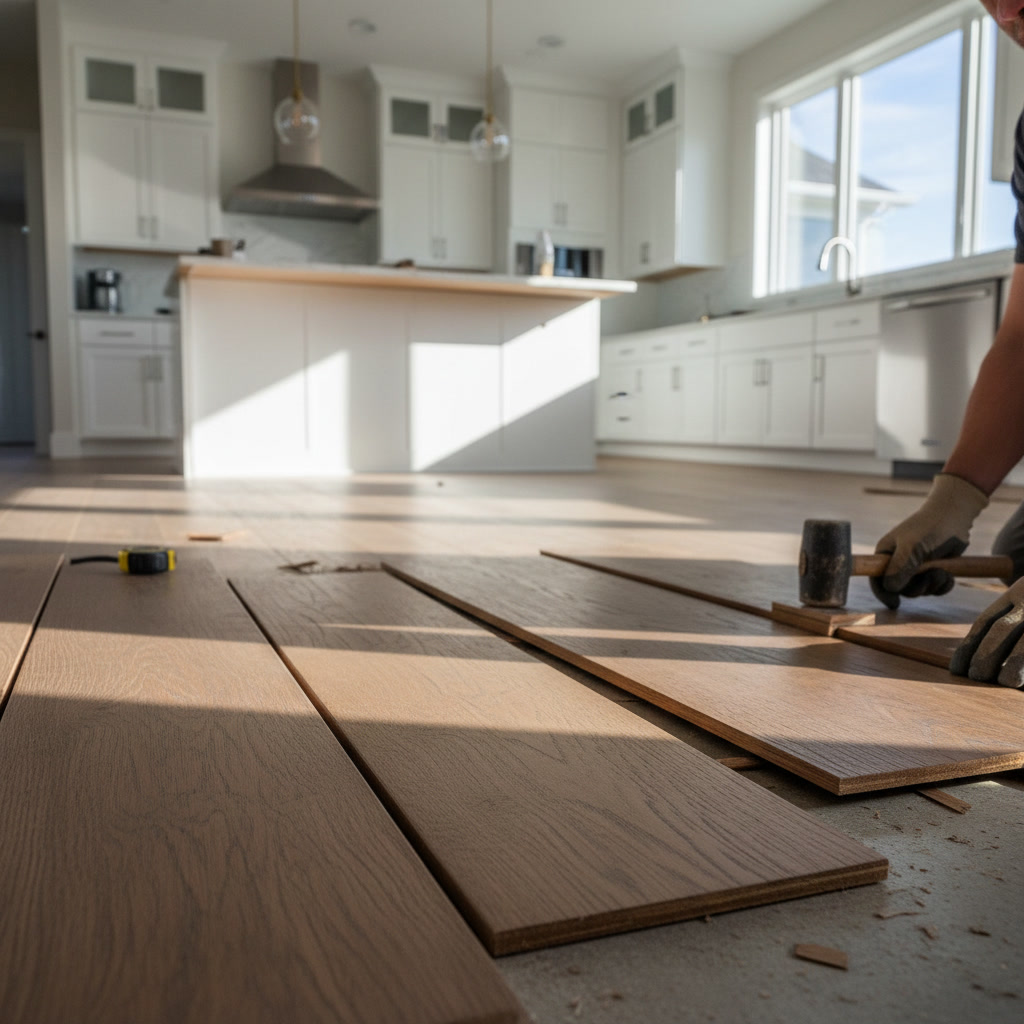
The click-lock installation method allows LVP to float over existing floors in many cases, reducing both labor costs and project timelines. This installation flexibility makes vinyl flooring an excellent choice for quick renovations or situations where removing old flooring would disturb asbestos tiles or damage subfloors. Quality LVP products carry warranties ranging from 15 to 25 years for residential use.
One critical consideration with LVP involves its performance under heavy point loads. Refrigerators, kitchen islands, and other stationary heavy items can create permanent indentations if the subfloor underneath flexes. Ensuring a completely flat, rigid subfloor before installation prevents this issue. Professional installers know to check for deflection and reinforce joists or add underlayment where needed.
Engineered Hardwood Balances Beauty with Stability
Solid hardwood remains risky in kitchens due to its tendency to expand and contract with humidity changes, but engineered hardwood solves this problem through its layered construction. A thin veneer of real hardwood sits atop a plywood or high-density fiberboard core, allowing the floor to resist moisture movement while maintaining authentic wood character. This construction method reduces cupping and warping by up to 90 percent compared to solid planks.
Florida’s high humidity creates special challenges for wood products. Even engineered wood requires site-specific moisture testing before installation. The subfloor moisture content should not exceed 12 percent, and the differential between subfloor and flooring should remain under four percent. Professional wood flooring contractors use moisture meters and allow proper acclimation time before installation begins.
Surface finish selection dramatically affects performance in kitchen environments. Factory-applied aluminum oxide finishes provide superior scratch and moisture resistance compared to traditional polyurethane. Site-finished floors allow for custom stain colors but require longer cure times and create dust during application. For kitchens, prefinished engineered planks typically deliver better long-term results with less installation disruption.
Comparing Cost and Lifespan Across Popular Materials
Material costs represent only part of your total investment. Installation complexity, substrate preparation, and long-term maintenance create hidden expenses that vary significantly by flooring type. Tile requires the most skilled installation but needs minimal upkeep over decades. Vinyl installs quickly and affordably but may require replacement in 15 to 20 years. Wood demands regular refinishing but can last 40 years or more with proper care.
Budget-conscious homeowners often gravitate toward laminate flooring, which costs two to five dollars per square foot installed. However, laminate’s particle board core swells irreparably when exposed to standing water, making it a poor choice for kitchens despite its attractive initial price point. The savings evaporate quickly if you need to replace warped sections after a dishwasher leak or sink overflow.
Total cost of ownership over 20 years tells a different story than upfront expense. A quality porcelain tile installation costing 12 dollars per square foot requires virtually no maintenance beyond routine cleaning, while a vinyl floor at seven dollars per square foot may need full replacement at year 15. When you factor in the disruption and expense of future replacement, the more durable option often delivers better value.
Evaluating Slip Resistance and Safety Features
Kitchen floors become hazardous when wet, and material texture directly impacts slip resistance. The Americans with Disabilities Act recommends a minimum static coefficient of friction of 0.60 for level surfaces and 0.80 for ramps. Polished porcelain and high-gloss luxury vinyl often fall below these thresholds when wet, while textured or matte finishes provide better traction.
Tile manufacturers now publish COF ratings for their products, making safety comparison straightforward. Look for ratings that specify both dry and wet conditions, as some tiles perform well when dry but become slippery with even minimal moisture. Smaller tiles with more grout lines generally offer better slip resistance than large-format tiles because grout provides textural variation.
Households with elderly residents or young children should prioritize safety over aesthetics when conflicts arise. Softer materials like luxury vinyl also provide better impact absorption if someone falls, potentially preventing serious injuries. The slight cushioning effect makes vinyl more comfortable for extended standing during meal preparation as well.
Matching Flooring Style to Your Kitchen Design
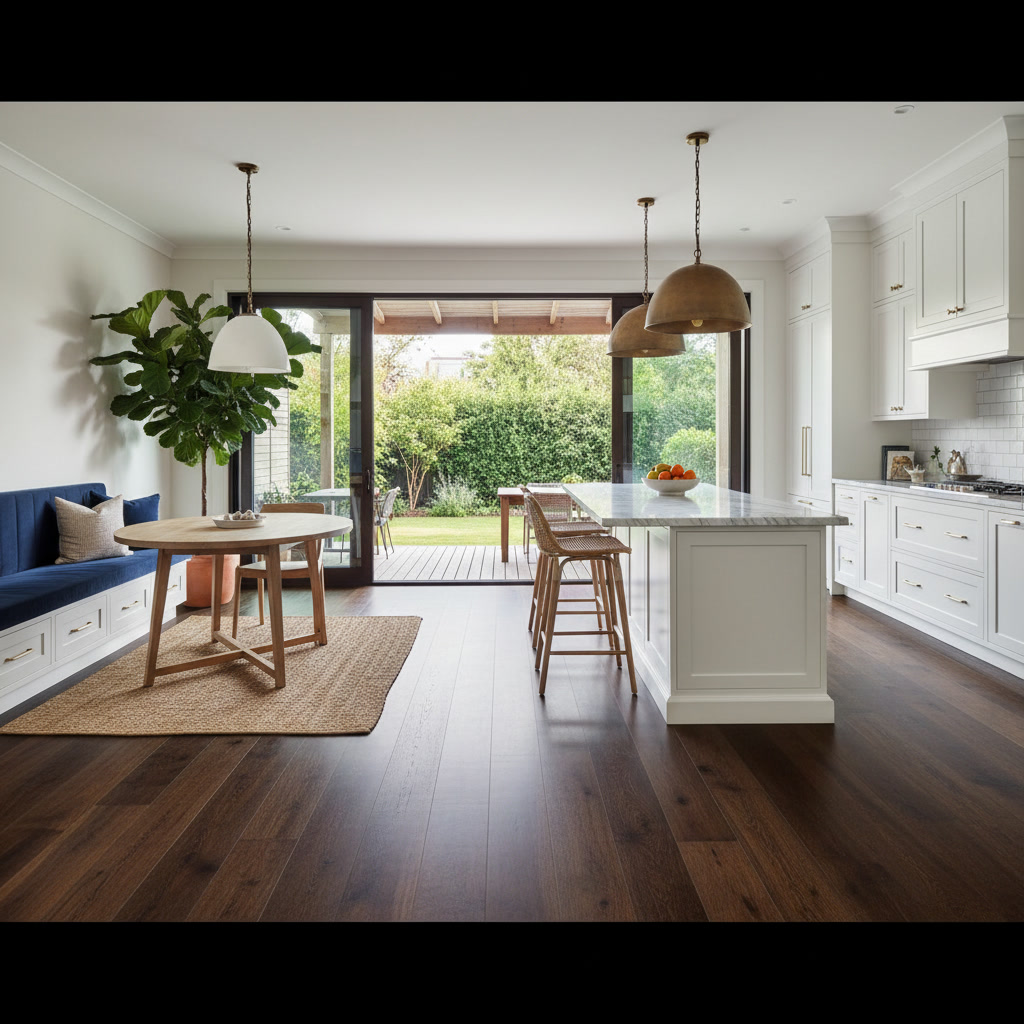
Visual continuity between your cabinets, countertops, and flooring creates a cohesive design that feels intentional rather than assembled from disconnected elements. Dark floors show dust and light scratches more readily than medium tones, while very light floors can appear sterile or show stains. Medium brown and gray tones offer the most forgiving maintenance profile for busy households.
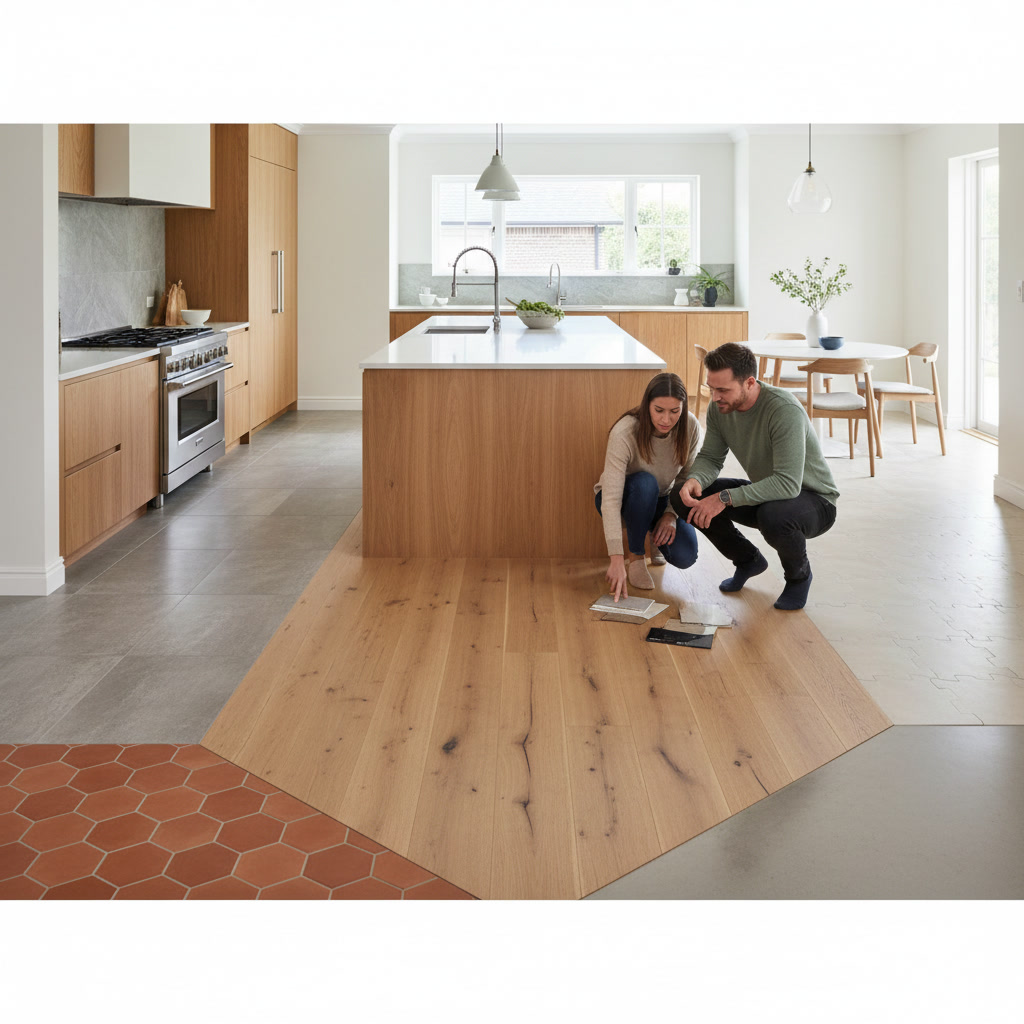
Pattern selection affects perceived space dramatically. Wood-look planks installed parallel to the longest wall make narrow kitchens feel wider, while diagonal installation adds visual interest but wastes more material in cuts. Large-format tiles create a contemporary, open feel, while smaller mosaics or classic patterns suit traditional designs. Your kitchen remodeling project should establish the overall design direction before finalizing flooring specifics.
Transition details between kitchen flooring and adjacent rooms require careful planning. Abrupt material changes can create trip hazards and disrupt visual flow. T-moldings, reducers, and threshold strips come in profiles designed for specific height differentials and material pairings. Professional installers carry inventory of transition pieces that match your flooring or can custom-fabricate solutions for unusual situations.
Understanding Maintenance Requirements Before You Commit
Different materials demand vastly different cleaning protocols and upkeep schedules. Tile requires periodic grout resealing every one to three years depending on sealer quality and traffic levels. Wood needs immediate cleanup of spills to prevent water damage and may require professional refinishing every seven to ten years. Vinyl demands the least maintenance but can be damaged by harsh chemicals or abrasive cleaning tools.
Some materials hide dirt and wear better than others. Matte finishes disguise scratches and water spots more effectively than glossy surfaces. Patterned or variegated designs camouflage the inevitable scuffs and stains that accumulate in high-use kitchens, while solid colors show every imperfection. Busy households benefit from choosing materials that age gracefully rather than show every bit of wear.
Professional maintenance costs should factor into your material decision. Stone and certain exotic woods require specialized cleaning products and techniques that add ongoing expense. Standard porcelain tile and luxury vinyl work fine with simple pH-neutral cleaners and basic tools. If you prefer outsourcing floor care to professionals, verify that local services can properly handle your chosen material before installation.
How Climate and Location Influence Material Performance
Coastal Florida presents specific challenges that make certain flooring materials more suitable than others. Salt air accelerates corrosion of metal components in floor assemblies, affecting transition strips and fasteners. High humidity throughout most of the year means materials must resist moisture absorption and mold growth. Homes without consistent air conditioning during vacations or seasonal closures need especially robust flooring that tolerates environmental fluctuations.
Concrete slab foundations, common in South Florida construction, require different installation methods than wood-framed floors. Some adhesives and underlayments fail in high-alkalinity concrete, causing bond failure and floor delamination. Moisture vapor transmission through slabs creates problems for moisture-sensitive materials unless proper vapor barriers are installed. Local contractors familiar with regional construction standards prevent these issues through proper material selection and installation techniques.
Hurricane preparedness also factors into flooring decisions for coastal residents. Materials that survive flooding and can be salvaged after water intrusion offer practical advantages. Porcelain tile typically survives flood events intact if properly installed, while wood products usually require complete replacement after submersion. Insurance considerations and replacement costs make disaster resilience worth evaluating during the selection process.
Making Your Kitchen Floor Work for Your Lifestyle
Your daily kitchen use patterns should drive material selection more than trends or abstract preferences. Families who cook extensively benefit from softer, warmer materials that reduce fatigue during long periods of standing. Minimalist households who rarely cook might prioritize visual impact over comfort. Pet owners need scratch-resistant surfaces with textures that hide claw marks, while homes without pets can consider softer or more delicate options.
Resale considerations balance against personal enjoyment of your space. If you plan to stay in your home for ten years or more, choose flooring that makes your daily life better rather than what a hypothetical future buyer might prefer. You will walk across that floor thousands of times, and personal satisfaction over a decade far outweighs marginal resale value differences. Understanding how the remodeling process unfolds helps you make confident decisions aligned with both immediate needs and long-term goals.
Budget realities require honest assessment of must-have features versus nice-to-have upgrades. Allocating funds toward premium materials in high-impact areas while accepting good-quality standard options elsewhere lets you maximize both quality and visual appeal within financial constraints. Many homeowners spend their entire flooring budget on material costs and shortchange installation quality, creating problems that undermine even expensive products.
Building a Kitchen Floor That Lasts Decades
Selecting the right kitchen flooring means balancing durability, aesthetics, maintenance, and budget into a cohesive decision that serves your household for years. Porcelain tile delivers unmatched longevity and water resistance, luxury vinyl provides versatility and comfort, and engineered wood offers authentic beauty with improved stability. Each material excels in specific applications, and understanding your priorities helps you identify the best fit.
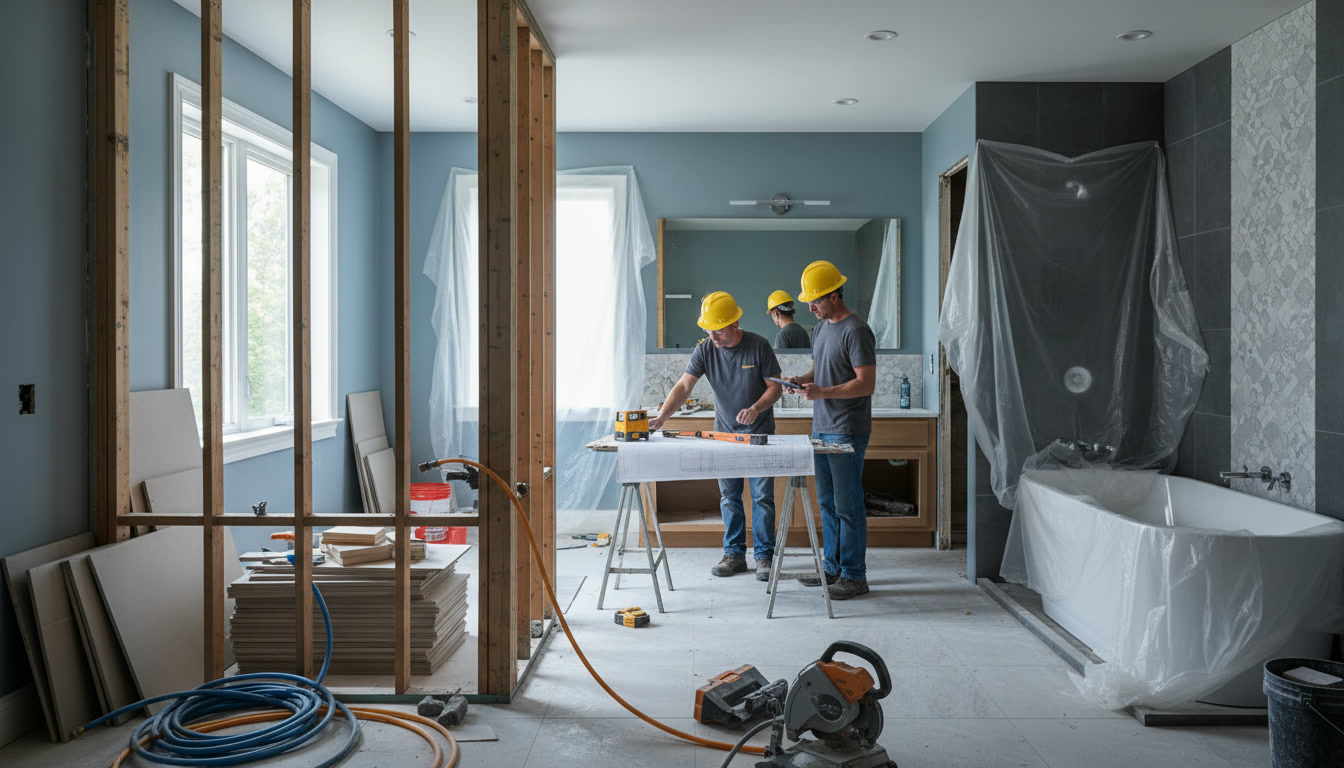
Professional installation proves critical regardless of which material you choose. Proper substrate preparation, moisture testing, and attention to manufacturer specifications separate floors that perform flawlessly for decades from those that develop problems within years. Investing in skilled labor protects your material investment and ensures you get the full lifespan and performance your flooring should deliver.
Flooring Friend LLC brings ten years of specialized experience to kitchen renovations throughout South Florida. Our team understands how coastal climate, local construction methods, and daily use patterns combine to create unique requirements for kitchen floors. Whether you need guidance on material selection or expert installation that stands behind our work, we deliver results that enhance both function and beauty. Contact us at +15617882222 to discuss your kitchen flooring project and schedule a consultation.